 English▼



- E-Mail : David@tmaxcn.com
- E-Mail : Davidtmaxcn@gmail.com
- : No. 39, Xinchang Road, Xinyang, Haicang Dist., Xiamen, Fujian, China (Mainland)
Blog
Graphene Foam
June 30,2026.
Xiamen Tmax Battery Equipments Limited was set up as a manufacturer in 1995, dealing with lithium battery equipments, technology, etc. We have total manufacturing facilities of around 200000 square foot and more than 230 staff. Owning a group of experie-nced engineers and staffs, we can bring you not only reliable products and technology, but also excellent services and real value you will expect and enjoy.
Graphene Foam: Properties, Applications, and Future Potential
Graphene foam is a threedimensional (3D) material composed of interconnected graphene sheets or layers. It combines the extraordinary properties of graphene—such as high electrical conductivity, thermal conductivity, mechanical strength, and surface area—with a porous structure that enhances its functionality in various applications. This innovative material has garnered significant attention due to its versatility and potential for revolutionizing industries ranging from energy storage to biomedical engineering.
In this article, we will explore the properties, types, applications, advantages, and challenges associated with graphene foam.
●What Is Graphene Foam?
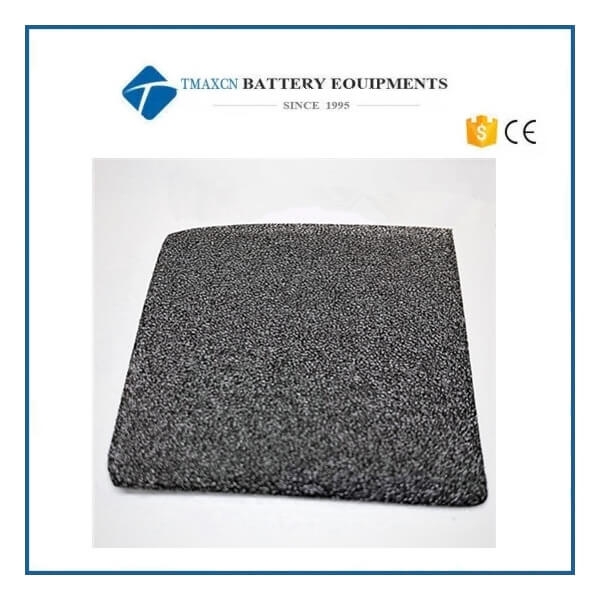
Graphene foam is a lightweight, highly porous material made by assembling graphene sheets into a 3D network. The foamlike structure provides an extensive surface area, excellent electrical and thermal conductivity, and exceptional mechanical flexibility. These properties make it ideal for applications requiring highperformance materials with low density.
The production of graphene foam typically involves techniques such as chemical vapor deposition (CVD), freezedrying, or templating methods, where graphene oxide (GO) is reduced to form a 3D structure.
●Key Properties of Graphene Foam
1. High Surface Area
The porous structure offers an enormous surface area, making it suitable for adsorption, catalysis, and energy storage applications.
2. Excellent Conductivity
Graphene foam exhibits superior electrical and thermal conductivity, enabling efficient charge transfer and heat dissipation.
3. Mechanical Strength
Despite its lightweight nature, graphene foam possesses remarkable tensile strength and flexibility.
4. Chemical Stability
Graphene foam is chemically inert and resistant to corrosion, ensuring longterm stability in harsh environments.
5. Lightweight
Its low density makes it ideal for applications where weight reduction is critical, such as aerospace and automotive industries.
6. Customizable Porosity
The pore size and distribution can be tailored during fabrication to suit specific requirements.
●Types of Graphene Foam
1. Reduced Graphene Oxide (rGO) Foam
Produced by reducing graphene oxide through chemical or thermal methods.
Commonly used due to its ease of fabrication and costeffectiveness.
2. 3D Printed Graphene Foam
Fabricated using additive manufacturing techniques, allowing complex geometries and precise control over structure.
3. MetalEnhanced Graphene Foam
Incorporates metallic nanoparticles or coatings to enhance catalytic activity or conductivity.
4. Hybrid Graphene Foams
Combines graphene with other materials (e.g., polymers, ceramics, or carbon nanotubes) to create composites with enhanced properties.
●Applications of Graphene Foam
1. Energy Storage
Supercapacitors: Graphene foam's high surface area and conductivity make it an excellent electrode material for supercapacitors, offering rapid charge/discharge cycles and long cycle life.
Batteries: Used as a scaffold for lithiumion batteries to improve energy density and charging speed.
2. Sensors
Gas Sensors: Detects gases like CO₂, NOₓ, and volatile organic compounds (VOCs) due to its large surface area and sensitivity.
Biological Sensors: Monitors biomolecules, such as glucose or DNA, with high accuracy and selectivity.
3. Water Treatment
Removes contaminants, heavy metals, and organic pollutants from water through adsorption and filtration.
4. Catalysts
Acts as a support material for catalysts in reactions like hydrogen evolution, oxygen reduction, and carbon dioxide reduction.
5. Electronics
Used in flexible electronics, transparent conductive films, and electromagnetic interference (EMI) shielding.
6. Biomedical Engineering
Serves as scaffolds for tissue engineering and drug delivery systems due to its biocompatibility and ability to support cell growth.
7. Aerospace and Automotive
Provides lightweight structural components with high strengthtoweight ratios.
8. Thermal Management
Enhances heat dissipation in electronic devices and thermal interface materials.
●Advantages of Graphene Foam
1. Superior Performance
Combines the best properties of graphene with the benefits of a 3D structure.
2. Versatility
Suitable for a wide range of applications across multiple industries.
3. Scalability
Can be produced at varying scales, from labscale experiments to industrialscale manufacturing.
4. Customizability
Tailored properties through modifications in composition, porosity, and structure.
5. Environmental Benefits
Offers sustainable solutions for energy storage, water treatment, and pollution control.
●Challenges and Limitations of Graphene Foam
1. High Production Costs
Current fabrication methods are expensive and require further optimization for largescale adoption.
2. Complex Manufacturing Processes
Techniques like CVD and freezedrying demand specialized equipment and expertise.
3. Material Degradation
Longterm stability under certain conditions (e.g., high humidity or temperature) requires further investigation.
4. Limited Commercial Availability
While research on graphene foam is advancing rapidly, widespread commercialization is still in its early stages.
5. Standardization
Lack of standardized fabrication protocols and performance metrics hinders consistent quality across suppliers.
●Innovations in Graphene Foam Technology
To overcome existing challenges, researchers are exploring new approaches:
1. CostEffective Synthesis Methods
Developing scalable and economical techniques for producing graphene foam.
2. Functionalization
Enhancing properties through chemical doping, coating, or hybridization with other materials.
3. Additive Manufacturing
Leveraging 3D printing to create complex structures with precise control over geometry and porosity.
4. Recycling and Sustainability
Investigating ways to recycle waste materials into graphene foam for ecofriendly applications.
5. Integration with Emerging Technologies
Combining graphene foam with advancements in artificial intelligence, quantum computing, and renewable energy systems.
●Examples of Graphene Foam Manufacturers and Research Institutions
| Organization | Focus Areas |
|||
| XG Sciences (USA) | Energy storage, sensors, and composites |
| Haydale Graphene Industries (UK) | Water treatment, coatings, and electronics |
| Graphenea (Spain) | Researchgrade graphene foam for academia |
| Tsinghua University (China) | Biomedical applications and tissue engineering |
●Conclusion
Graphene foam represents a groundbreaking advancement in material science, combining the exceptional properties of graphene with the versatility of a 3D structure. Its potential applications span energy storage, sensors, water treatment, electronics, and biomedical engineering, among others. While challenges remain in terms of cost, scalability, and standardization, ongoing research and innovation continue to unlock new possibilities for this remarkable material.
What excites you most about the future of graphene foam? Share your thoughts below! Together, let’s explore how this cuttingedge material can transform industries and address global challenges.
 +86 13174506016
 David@tmaxcn.com

