 English▼



- Batteriepilot / Produktionslinie
- Batterielabor Montage
- Lithium Battery Pack Assembly Line
- Solid State Battery Assembly Line
- Sodium Ion Battery Production Line
- Supercapacitor Assembly Line
- Lithium Ion Battery Recycling Plant
- Dry Electrode Preparation Solution
- Perovskite Based Solar Cell Lab Line
- Electrode Preparation
- Li-Ion Battery Materials
- kathodenaktive Materialien
- anodenaktive Materialien
- Customized Battery Electrode
- Münze Zelle Materialien
- Lithium-Chip
- zylindrische Zellteile
- Batteriestromkollektoren
- batterieleitende Materialien
- Elektrolyt und Beutel
- Metal Mesh
- Batterieordner
- Trennzeichen und Klebeband
- Aluminiumlaminatfolie
- Nickelstreifen / -folie
- Battery Tabs
- Graphenmaterialien
- Nickel Felt
- Titanium Fiber Felt
- Battery Pack Machine & Compoments
- Battery Pack Compoments
- Turnkey Solutions Battery Pack Assembly Line
- Cell Sorter
- Battery Pack Spot Welder
- Laser Welder
- Battery Charging Discharging Tester
- Battery Pack Aging Machine
- Battery Pack Comprehensive Tester
- CCD Visual Inspector
- Battery Pape Sticking Machine
- BMS Testing Machine
- Al Wire Bonding Machine
- alle Batteriemontagemaschine
- Batterietester & Analysator
- Battery Safety Tester
- Material Characterization Tester
- Walzpresse Maschine
- Metall-Punktschweißgerät
- Vakuummischer Maschine
- Crimp- / Demontagemaschine
- Vakuumiermaschine
- Elektrolytfüllung
- Stapel- / Wickelmaschine
- Elektrodenschneider / -schneider
- Beutelformmaschine
- NMP Solvent Treatment System
- Lithium Battery Production Plant
- Vakuum-Glove-Box
- Öfen
- Hydraulikpresse
- Large Press Machine
- Coaters
- PVD Coater
- Ultrasonic Spray Coater
- Kugelmühle
- Planetenrührwerk / Mühle
- Labormaschine
- Metallelektrodenschaum
- WhatsApp : +86 18659217588
- E-Mail : David@tmaxcn.com
- E-Mail : Davidtmaxcn@gmail.com
- : No. 39, Xinchang Road, Xinyang, Haicang Dist., Xiamen, Fujian, China (Mainland)
Why Choose Polymer Batteries?
Polymer cells are widely used for their high packaging efficiency (90–95%), lightweight structure, and flexible design. They offer high energy density and excellent space utilization, making them ideal for EVs, energy storage, consumer electronics, and drones, with more compact and adaptable pack designs than cylindrical and prismatic cells.
Common Equipment in the Production Line
The polymer battery pack assembly line typically involves the following key machines:
Ultrasonic Welding Machine / Laser Welding Machine
Process Breakdown of Semi-Automatic Line
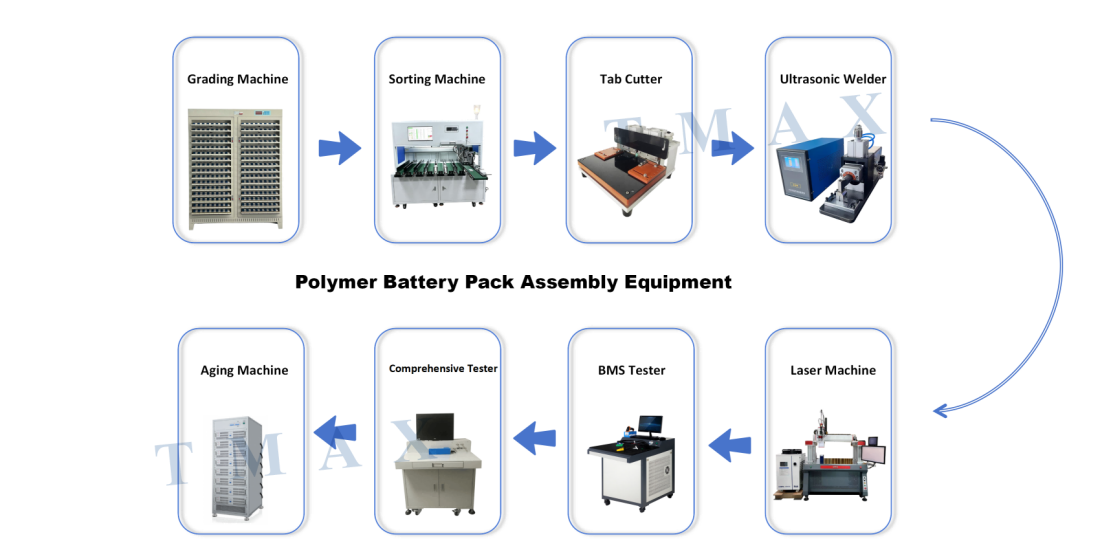
Semi-automatic lines combine manual operation with automated stations, providing a flexible and cost-effective solution for polymer battery module production.
They are especially suitable for multi-model, small-to-medium scale manufacturing, where frequent product changeover is required.
Step1: Polymer Cell Capacity Testing
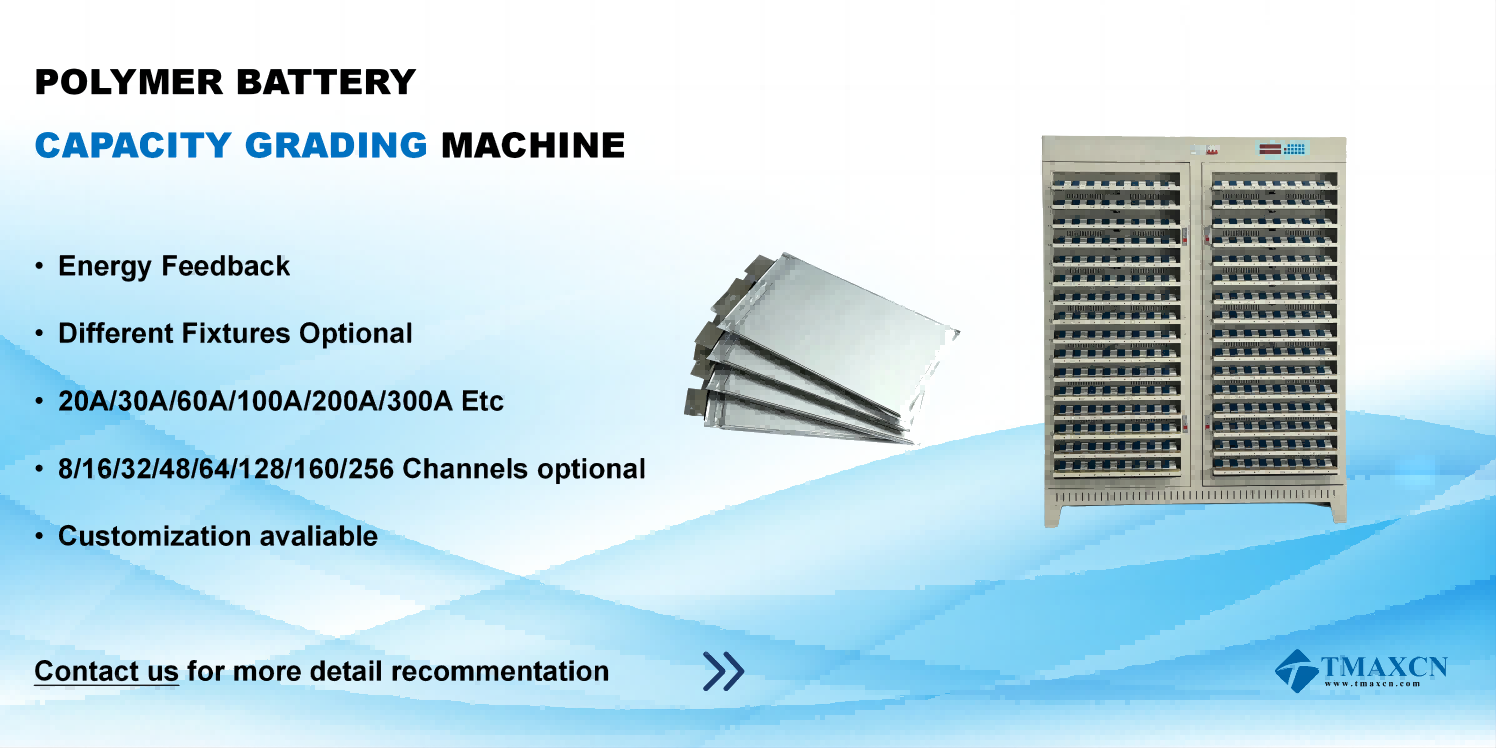
The grading machine is used to test cell capacity through charge and discharge cycles. Only qualified and well-matched cells proceed to the next stage, ensuring improved module performance and long-term consistency.
| Polymer Battery Capacity Grading Machine | ||||
| Model | 5V 10A | 5V 20A | 5V 30A | Customized |
| Channel | 1 / 2 / 4 / 8 / 128 / 256 / 512 / Customized | |||
| Clamp | open-close clamping fixture with a tray-based design  |
|||
Step2: Polymer Cell OCV&ACIR Sorting

The sorting system detects each cell’s voltage and internal resistance, automatically classifying them into different channels based on preset value ranges. Cells that do not meet any defined criteria are directed to the NG channel for rejection. This process ensures consistent cell grouping and improves overall module reliability.
| Prismatic Battery Sorting Machine | |||
| Barcode Scanner | Keyence or standard Chinese-made | ||
| Tester | HK3561/HIOKI Optional | ||
| Sorting Channels | 7+1=8CHS | 9+1=10CHS | Customizable |
Step3: Polymer Tab Cutting

The tab length cutting process is used to precisely trim both positive and negative tabs simultaneously, ensuring consistent tab length for each cell. The equipment is designed with a safe cutting mechanism that prevents short circuit during operation, improving both accuracy and process safety.
Step4: Polymer Cell Loading & Welding

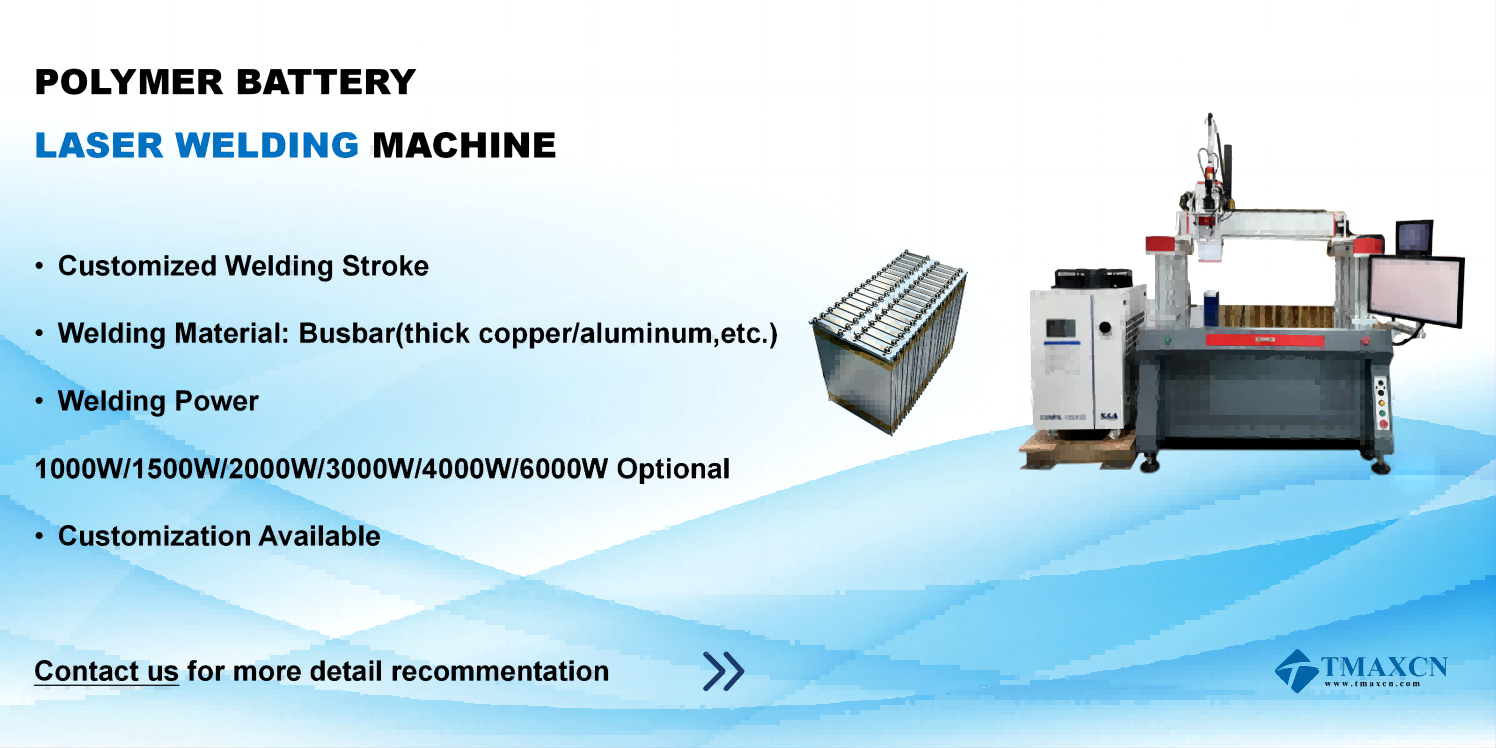
For polymer battery module welding, two options are available: ultrasonic welding and laser welding. Ultrasonic welding uses high-frequency vibration to join materials and is well-suited for soft or thin materials, while laser welding utilizes a high-energy laser beam and is more suitable for thicker busbars or rigid conductive structures. The selection of welding method depends on the customer’s battery design and structural requirements.
| Polymer Battery Welding Machine | ||
| Machine Type | Ultrasonic Welding | Laser Welding |
| Machine Model | 20–40 kHz | 1500W / 2000W / 3000W |
| Welding Principle | High-frequency vibration friction | High-energy laser beam melting |
| Suitable Materials | Soft / thin materials (Al/Cu tabs) | Thick materials / busbars |
| Heat Effect | Low heat impact | Localized high heat input |
| Welding Fixture | Optional | Required |
| Module Picture |  |
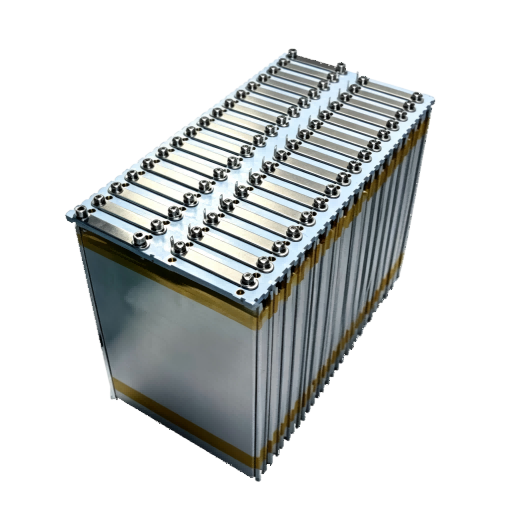 |
Step5: Polymer Battery Pack BMS Testing

The BMS testing system is used to verify the protection, communication, and electrical performance of battery management systems in assembled packs, ensuring safe and stable operation.
Main Features
Overcharge / Overdischarge protection test
Overcurrent / Short circuit protection test
Temperature protection test
Internal resistance & conduction resistance testing
Self-consumption detection
Communication function verification (CAN / RS485 / I2C) for accurate reading of SOC, voltage, temperature, and other data
| Battery Management System Testing Machine | |||
| Pack Series | 1-52S Battery Pack/Module | ||
| Current | 120/150/200/300/400/500/600/800A etc | Customizable | |
| Computer | Without computer | With computer | |
Step6: Polymer Battery Pack Comprehensive Testing

The battery comprehensive tester is suitable for all lithium-ion battery packs with CH+, P+, CH-, P- ports and is used to evaluate the overall electrical performance and reliability of battery packs. It applies a load or small AC current to measure key parameters such as open-circuit voltage, AC internal resistance, discharge characteristics, discharge overcurrent protection, short circuit protection, charge performance, and charge protection. By setting upper and lower limit values for each parameter, the system can quickly identify and screen out defective batteries from a batch of finished products, ensuring stable and reliable quality control.
| Battery Pack Comprehensive Tester | ||||
| Voltage Range | 50/60/100/120V/200V etc | Customizable | ||
| Current Range | 120/200/300/500/600A etc | |||
| Machine Picture | 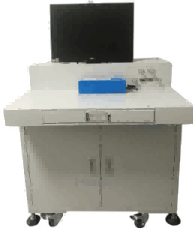 |
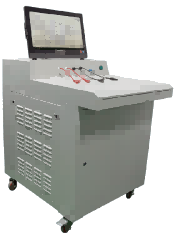 |
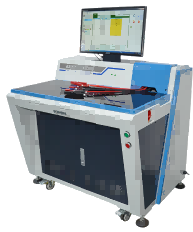 |
|
Step7: Polymer Battery Pack Aging Testing

The battery pack aging machine is designed for cycle aging tests, functional performance evaluation, and real-time monitoring of charge and discharge data. It supports four test modes including charging, discharging, shelving, and cycling, allowing flexible program configuration to simulate real working conditions and comprehensively evaluate battery stability and reliability.
| Battery Pack Aging Testing Machine | ||||
| Voltage | 20V-1650V | |||
| Current | 10A-1200A | |||
| Channels | 1/2/3/4/6/7/8/12/16/32 etc | |||
| Type | Standard type/with energy regenerative function (optional) | |||
| Standard Model | 30A 10A 20-12CH | 85V 10A 20A 7-CH | 100V 20A 40A | Customized |
| Machine Picture |  |
 |
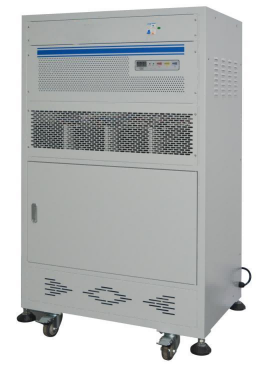 |
 |
Process Breakdown of Full Automatic Line
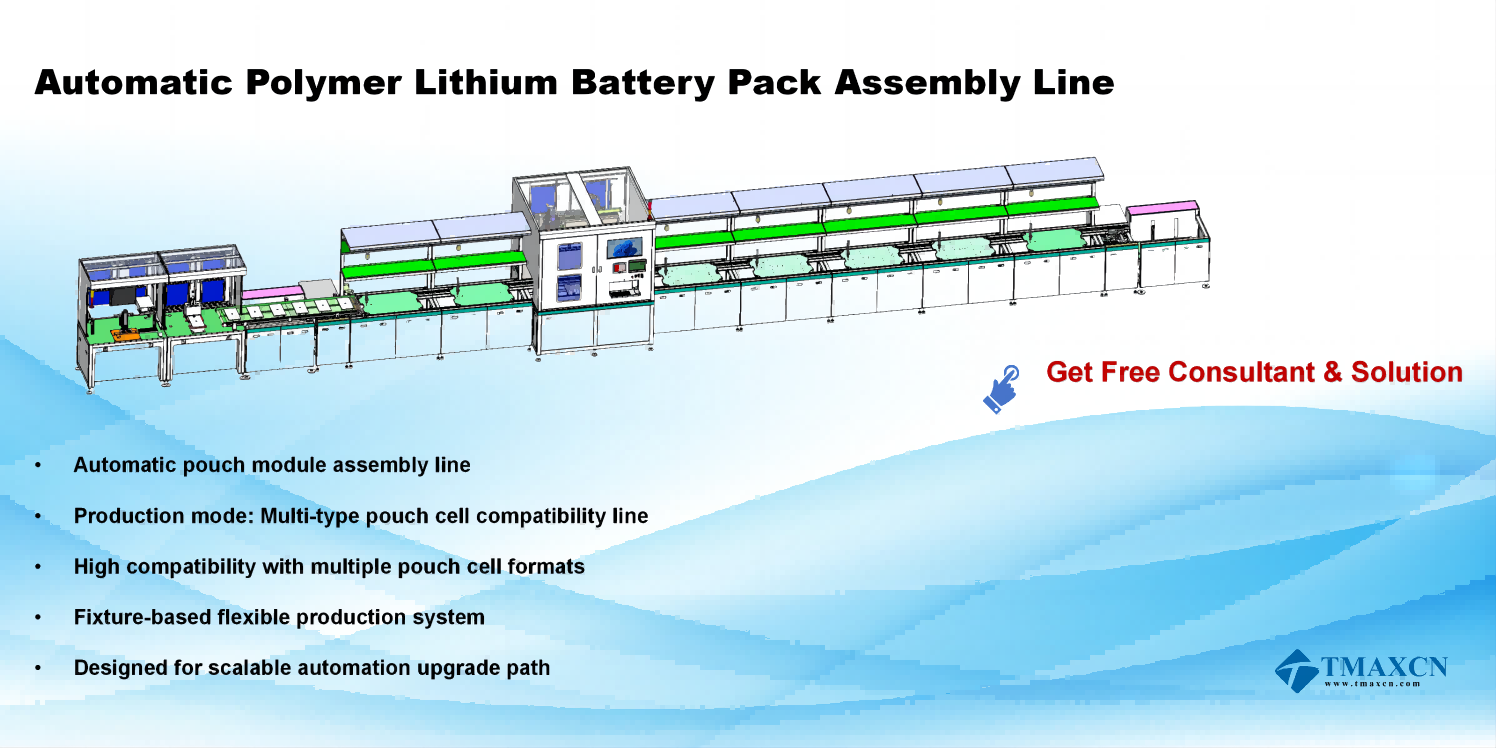
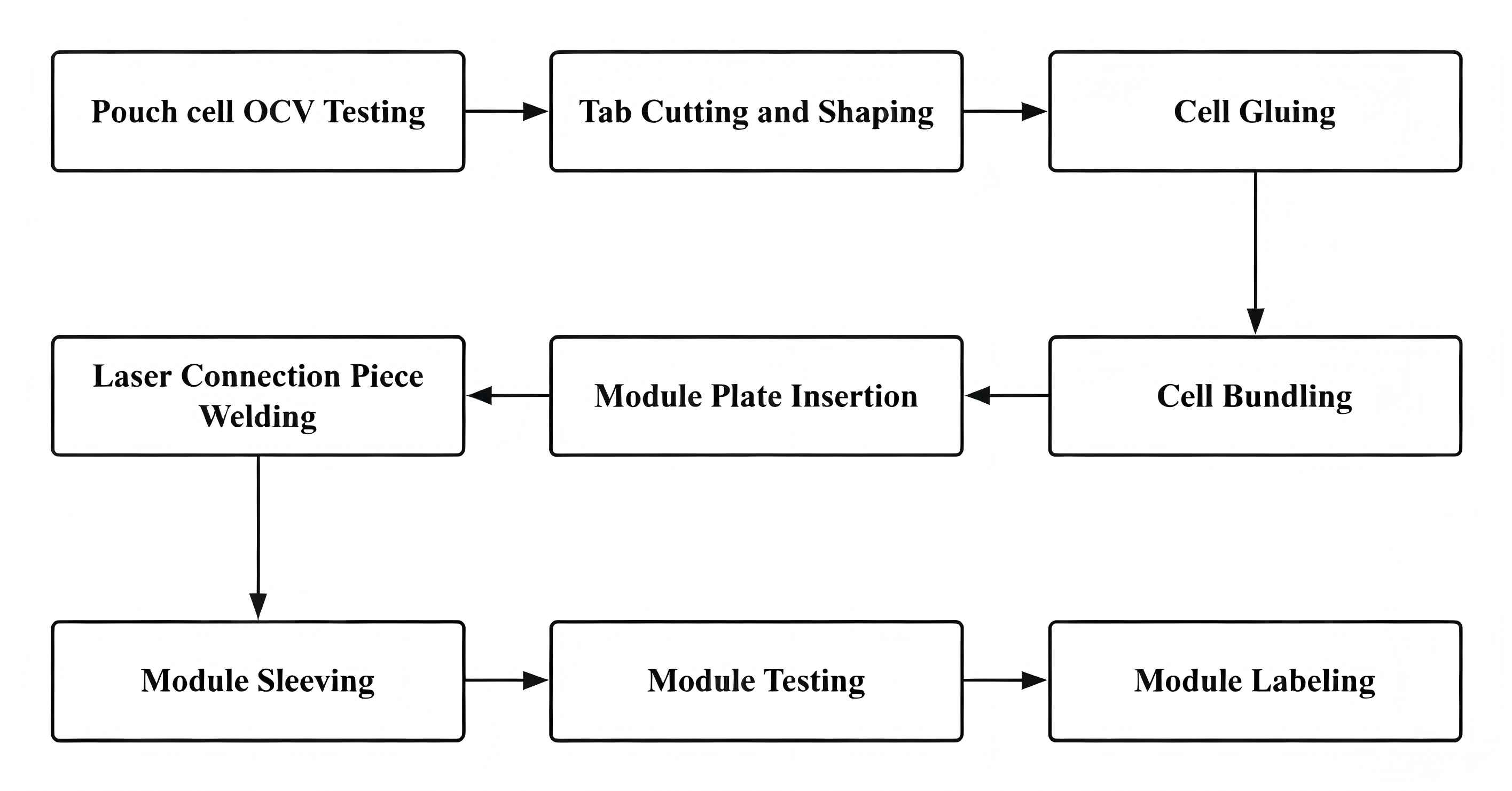
The fully automatic module and PACK production line covers the entire process from cell loading, cell testing, and cell taping to module assembly, module welding, and module testing, enabling a fully automated and continuous production workflow from cell to finished battery pack.
Production Line Process Flow
Polymer Battery Application

Polymer battery packs are increasingly widely used across energy storage systems, electric vehicles, and portable electronic devices, driven by their high energy density, lightweight design, and flexible application adaptability.
Contact us to get a complete customized solution.
 +86 13174506016
 David@tmaxcn.com

