 English▼



- E-Mail : David@tmaxcn.com
- E-Mail : Davidtmaxcn@gmail.com
- : No. 39, Xinchang Road, Xinyang, Haicang Dist., Xiamen, Fujian, China (Mainland)
Blog
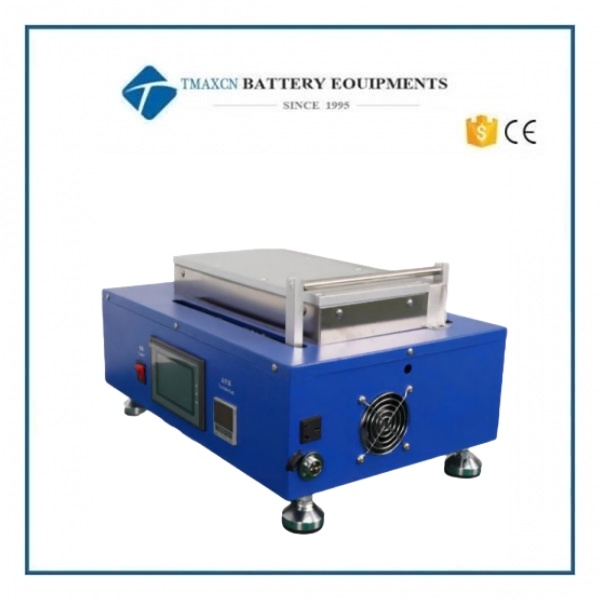
Tape Casting Machine
March 20,2026.
Xiamen Tmax Battery Equipments Limited was set up as a manufacturer in 1995, dealing with lithium battery equipments, technology, etc. We have total manufacturing facilities of around 200000 square foot and more than 230 staff. Owning a group of experie-nced engineers and staffs, we can bring you not only reliable products and technology, but also excellent services and real value you will expect and enjoy.
A tape casting machine is a specialized piece of equipment used to produce thin, uniform ceramic or polymer films by spreading a liquid slurry onto a moving carrier substrate. This process is widely employed in industries such as electronics, aerospace, energy storage, and medical devices to manufacture components like multilayer ceramics, fuel cells, batteries, and sensors.
In this article, we will explore the principles, types, applications, advantages, challenges, and innovations associated with tape casting machines.
●Principles of Operation
1. Slurry Preparation
The raw materials (e.g., ceramic powders, binders, solvents) are mixed to form a homogeneous slurry with specific rheological properties.
The consistency of the slurry determines the quality and thickness of the final tape.
2. Casting Process
The slurry is poured onto a continuously moving carrier substrate (usually a plastic film or belt).
A doctor blade or similar tool controls the thickness of the deposited layer as it spreads evenly across the substrate.
3. Drying
The solvent in the slurry evaporates in a controlled drying chamber, leaving behind a solid, flexible tape.
Proper drying conditions (temperature, humidity, airflow) are critical to avoid defects like cracking or warping.
4. Peeling and Storage
Once dried, the tape is peeled off the carrier substrate and wound onto reels for further processing.
The tape can then be cut, laminated, or sintered depending on its intended application.
●Types of Tape Casting Machines
1. LaboratoryScale Machines
Compact and manually operated, ideal for research and smallscale production.
Typically used in universities, R&D labs, and prototyping facilities.
2. PilotScale Machines
Semiautomated systems capable of producing larger quantities of tape while maintaining precision.
Suitable for testing and scaling up processes before fullscale manufacturing.
3. IndustrialScale Machines
Fully automated systems designed for highthroughput production.
Equipped with advanced features like realtime monitoring, PLC control, and integrated drying chambers.
4. Specialized Machines
Custombuilt for specific applications, such as producing ultrathin tapes (<50 µm) or handling reactive materials.
●Advantages of Tape Casting Machines
1. High Precision
Produces uniform thickness and smooth surfaces, ensuring consistent product quality.
2. Versatility
Compatible with a wide range of materials, including ceramics, polymers, metals, and composites.
3. Scalability
Can be adapted from labscale experiments to largescale industrial production.
4. CostEffectiveness
Reduces material waste and labor costs compared to traditional manufacturing methods.
5. Customization
Allows adjustment of parameters (e.g., slurry composition, casting speed, drying conditions) to meet specific requirements.
6. Automation
Modern machines offer advanced automation features, improving efficiency and reducing human error.
●Challenges in Tape Casting
1. Rheology Control
Achieving the correct slurry viscosity and flow behavior is critical but challenging due to variations in raw materials.
2. Drying Defects
Improper drying can lead to issues like cracking, curling, or uneven shrinkage, affecting tape quality.
3. Surface Quality
Ensuring defectfree surfaces requires precise control over casting and drying processes.
4. Material Compatibility
Some materials may require specialized slurries or casting conditions, increasing complexity.
5. Maintenance
Regular cleaning and calibration are necessary to prevent contamination and ensure accuracy.
●Applications of Tape Casting Machines
Tape casting is widely used in various industries:
1. Electronics
Manufacturing multilayer ceramic capacitors (MLCCs), piezoelectric actuators, and printed circuit boards (PCBs).
2. Energy Storage
Producing electrolyte membranes for fuel cells and separator layers for lithiumion batteries.
3. Medical Devices
Creating substrates for biosensors, drug delivery systems, and implantable devices.
4. Aerospace
Developing lightweight structural components and thermal protection systems.
5. Automotive
Fabricating catalyst supports, exhaust gas filters, and battery electrodes.
6. Construction
Producing tiles, coatings, and insulating materials for building applications.
●Innovations in Tape Casting Technology
To address challenges and enhance performance, manufacturers are developing advanced tape casting solutions:
1. Smart Monitoring Systems
Incorporating sensors and AI for realtime monitoring of slurry properties, casting thickness, and drying conditions.
2. EcoFriendly Designs
Using waterbased slurries and recyclable materials to reduce environmental impact.
3. UltraThin Tape Production
Specialized machines capable of producing tapes with thicknesses below 10 µm for advanced applications.
4. Modular Systems
Offering scalable and customizable designs to adapt to different production needs.
5. Integration with Additive Manufacturing
Combining tape casting with 3D printing for hybrid manufacturing processes.
●The Future of Tape Casting Machines
As demand grows for thinner, more complex materials, tape casting technology will continue to evolve. Key trends shaping the future include:
1. Increased Precision
Development of nanoscale casting techniques for cuttingedge applications in electronics and biotechnology.
2. Focus on Sustainability
Ecofriendly materials, processes, and recycling technologies to support circular economies.
3. Integration with Emerging Technologies
Combining tape casting with AI, IoT, and robotics for smarter diagnostics and analysis.
4. Global Standards Compliance
Ensuring compatibility with evolving international regulations for safety and performance.
5. Expansion into New Markets
Adapting tape casting machines for emerging fields like quantum computing, wearable technology, and renewable energy.
●Conclusion
Tape casting machines play a crucial role in the production of highquality thin films for a wide range of applications. Their continuous improvement ensures they remain a key technology in modern manufacturing.
What excites you most about the future of tape casting technology? Share your thoughts below! Together, let’s explore how these innovative machines can shape the future of material science and beyond.
 +86 13174506016
 David@tmaxcn.com

